

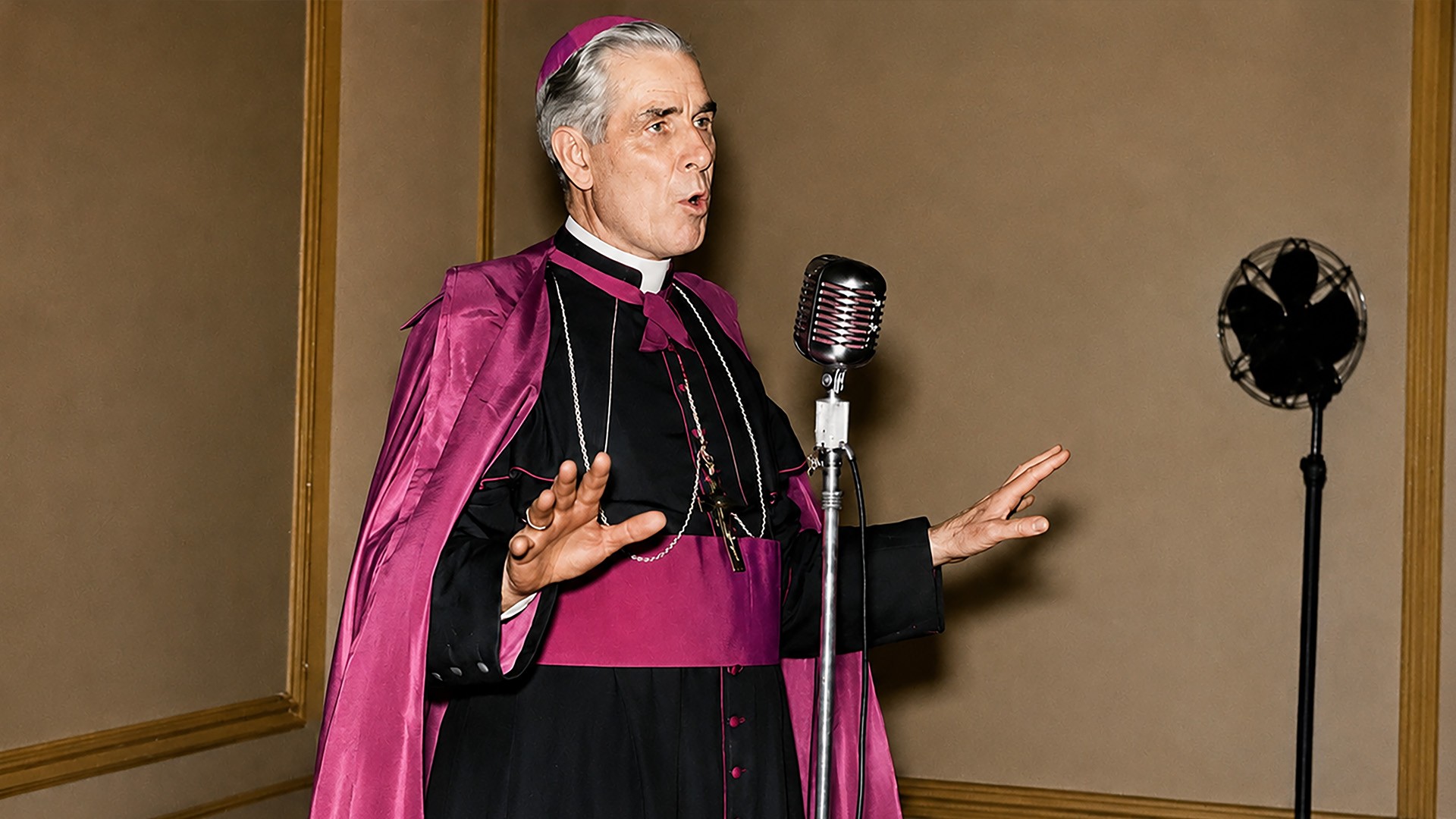
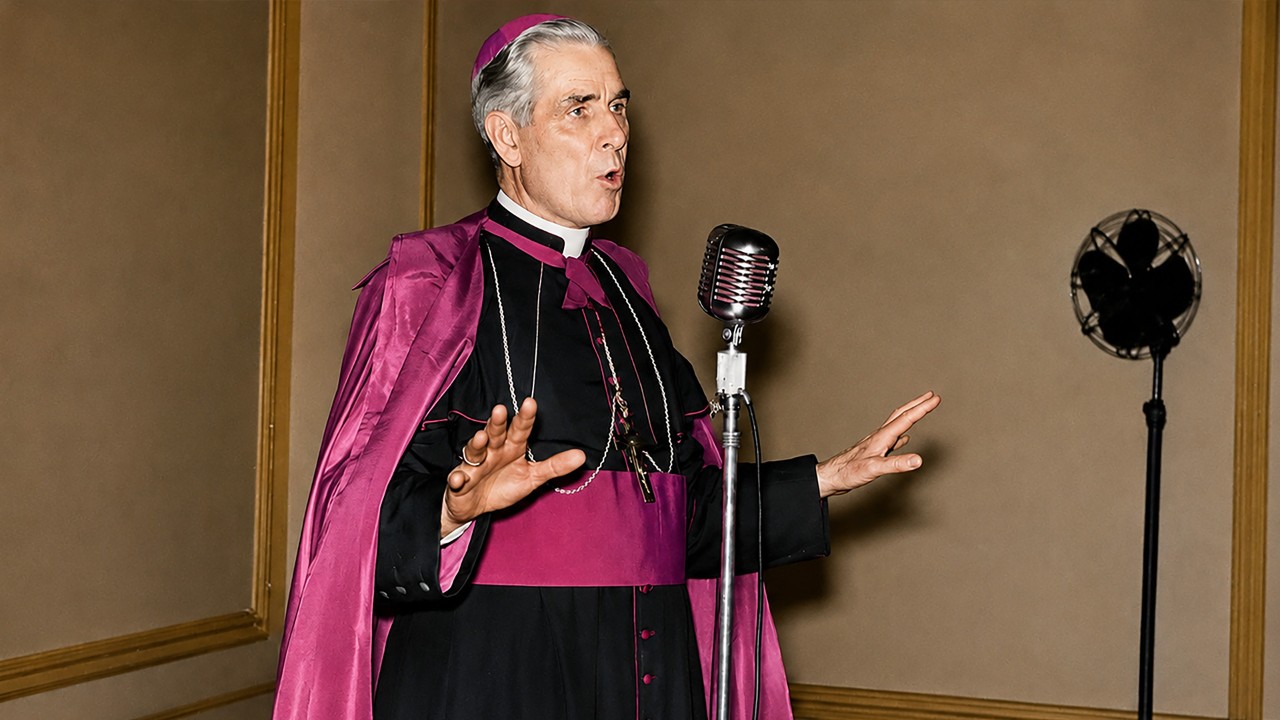
Archbishop Fulton J. Sheen, one of the most influential Catholic communicators of the twentieth century, was beatified on September 24, 2026, in St. Louis, Missouri.
Cardinal Luis Antonio Tagle, Pro-Prefect of the Dicastery for Evangelization, presided over the Mass. Ahead of the celebration, Pope Leo XIV recalled Sheen’s remarkable ability to use the media creatively in the service of the Gospel, holding him up as an example for the Church’s mission today.
Born in El Paso, Illinois, in 1895, Sheen was ordained a priest for the Diocese of Peoria in 1919. After advanced studies in Europe, he taught philosophy and theology at the Catholic University of America in Washington.
His gift for making complex ideas accessible soon found a much wider audience. Beginning in 1930, he hosted the radio program The Catholic Hour. In the 1950s, his television program Life Is Worth Living made him a household name across the United States.
With little more than a blackboard, a camera and an extraordinary ability to speak directly to his audience, Sheen addressed questions of faith, freedom, family, suffering and human dignity. His broadcasts reached millions, and in 1953 he received an Emmy Award.
Yet the source of his effectiveness, those who knew his spirituality insist, was not simply his talent as a speaker.
From the day of his priestly ordination, Sheen committed himself to spending a daily Holy Hour before the Blessed Sacrament. Prayer and silence were at the heart of a ministry that would eventually place him before enormous audiences.
Bishop Louis Tylka of Peoria has highlighted this aspect of Sheen’s legacy as particularly relevant today. In an age filled with information, images and constant communication, Sheen’s example suggests that authentic Christian communication begins with listening.
For him, evangelization was never simply about transmitting religious content. Its purpose was to lead people toward an encounter with Christ.
That same idea was central to Cardinal Tagle’s homily at the beatification Mass. He stressed that Sheen’s missionary success could not be measured by ratings, audience size or public recognition.
Tagle recalled that when Pope Pius XII once asked Sheen how many conversions he could attribute to his ministry, Sheen replied that he had never counted them. He preferred to see himself as a kind of doorkeeper, bringing people to the threshold and allowing God to do the rest.
His missionary commitment also extended far beyond broadcasting.
In 1950, Sheen became national director of the Society for the Propagation of the Faith. The following year he was appointed auxiliary bishop of New York. He later took part in the Second Vatican Council and served as bishop of Rochester from 1966 to 1969.
Throughout these years, he supported missionary Churches and repeatedly drew attention to poverty and suffering across the world.
One episode recalled by Cardinal Tagle captures this dimension of his ministry. During a visit to a leprosy center in Buluba, Uganda, Sheen initially recoiled from a severely ill patient while trying to offer him a silver crucifix. Realizing the contradiction between the Cross he was carrying and his fear of touching the man before him, Sheen overcame his hesitation and embraced him.
He later described himself as the “501st leper.”
The episode reflected a conviction that shaped his life: Christ was to be encountered not only in prayer and preaching, but also in the wounds of those who suffer.
Sheen died in New York on December 9, 1979. His cause for beatification was opened in Peoria in 2002. The miracle recognized for his beatification involved a child born in 2010 without a heartbeat or signs of breathing, who revived after 61 minutes and later recovered.
Decades after his death, Sheen’s broadcasts and writings continue to circulate widely, including among younger generations encountering him online for the first time.
His legacy therefore reaches beyond the technologies that made him famous. Radio and television were tools, not the center of his mission.
At the heart of Fulton Sheen’s witness was a simpler idea: use every available means to proclaim the Gospel, but never place the communicator at the center; speak only after learning to listen; and lead people not toward oneself, but toward Christ.