
by Vatican News
Around fifty of Italy’s leading companies, associations, and third-sector organizations took part in “Connact,” sitting at discussion tables to reflect on what the country is doing and developing at various levels. Thirteen thematic roundtables—agrifood, circular economy, defense, democracy and rights, energy, finance, food, industry and markets, media, logistics, technology, pharmaceuticals, research and innovation—summed up the priorities of the European agenda.
“Europe is currently facing its most difficult challenge: connecting concreteness with reality and vision in order to give a future to our economic system,” said Antonella Sberna, Vice-President of the European Parliament, speaking about dialogue and exchange between the productive system and politics. In a complex international scenario such as the one marking this historical phase—also highlighted by other interventions from Italian representatives within the EU—communication and information play a leading role, now called in particular to engage with the massive development of artificial intelligence.
“Conscious and responsible digital citizenship”
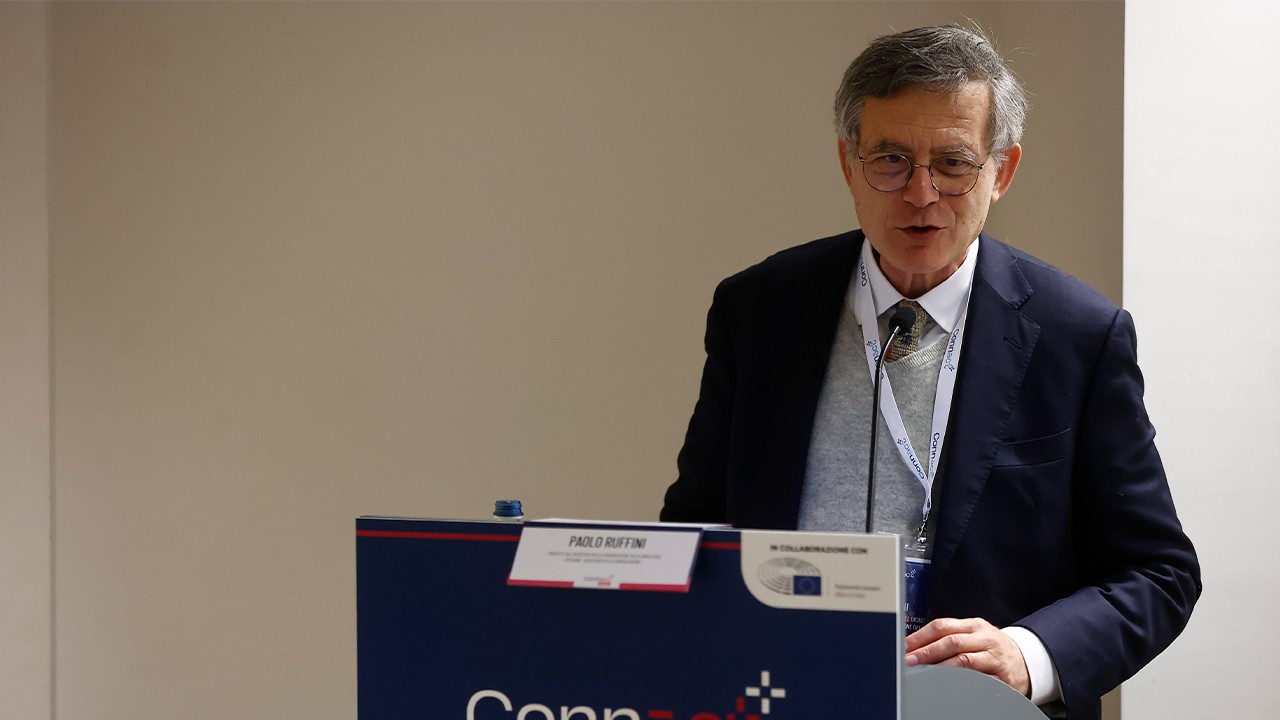
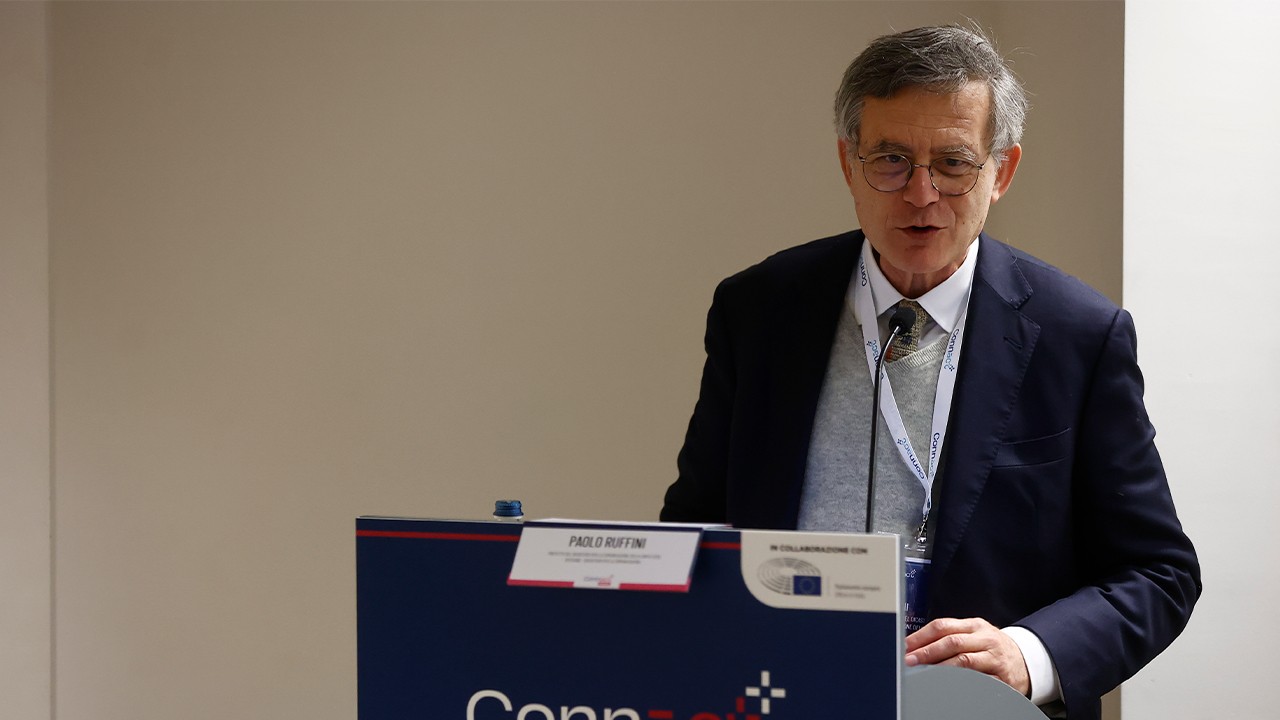
On this point, on the sidelines of the meeting, Paolo Ruffini, Prefect of the Dicastery for Communication, observed that the current media landscape calls for reflection on various aspects of communication, foremost among them transparency and the traceability of sources. This reflection, he noted, must involve not only the technology industry but also legislators, academia and the arts, creative companies, and those who work in information. Everyone, Ruffini said, referring to the message of Pope Leo XVI for the 60th World Communications Day, must feel “involved in building and making effective a conscious and responsible digital citizenship.”
The Prefect of the Dicastery for Communication recalled that from the very beginning of his pontificate, Leo XIV in particular urged journalists “never to give in to mediocrity,” a challenge that, for Ruffini, concerns everyone.
Recalling the work carried out by the Dicastery with its distinctly international character—editors and technical staff from more than 70 countries, the Vatican News multimedia portal with nearly six million unique users per month in around 60 languages, including three sign languages, and an average of about 20 million views per month—Ruffini reiterated, echoing the words of Leo XIV, that “the challenge before us is not to stop digital innovation, but to guide it.” And to each of us, he added, falls the task of “raising our voices together in defense of the human person, so that these tools may truly be integrated by us as allies.”